Publication
Scientific prediction in historical sociology: Ibn Khaldun meets Al Saud
Authors
P. Turchin, L. Grinin, A. Korotayev, and V.C. de Munck
Abstract
One of the hallmarks of a mature discipline is its ability to make predictions that can be used to test scientific theories. Scientific predictions do not necessarily have to be concerned with future events; they can be made about what occurred in the past. I illustrate such retrospective prediction with a case study of conversion to Christianity in the Roman Empire. The bulk of the paper deals with the logic and methodology of setting up a scientific prediction in macrosociology. The specific case study I develop is the possible state collapse in Saudi Arabia. The theoretical setting is provided by the demographic-structural theory of state collapse. The starting point is a previously developed model for political cycles in agrarian societies with nomadic elites, loosely based on the ideas of Ibn Khaldun. I modify the model to fit the characteristics of the modern Saudi Arabian state and estimate its parameters using data from published sources. The model predicts that the sovereign debt of Saudi Arabia will reach unmanageable proportions some 5-20 years in the future; the fiscal collapse will be followed by a state collapse in short order. The timing of the collapse is affected by exogenous events (primarily, fluctuations in world oil prices) and by parameter uncertainty (certain parameters of the model can be estimated only very approximately). The generalized prediction of eventual Saudi collapse together with subsidiary relationships specifying how variations in exogenous factors and parameters affect the future trajectory is the "Ibn Khaldun scenario." A major theoretical alternative is provided by a set of ideas and specific recommendations suggesting how Saudi Arabia can avoid crisis by reforming its economy and liberalizing its political system (the "IMF scenario"). The main purpose of the proposed test, therefore, is to determine which of the two theoretical scenarios will best describe the trajectory of the Saudi state over the next two decades.
Journal
History and Mathematics
Cite This Publication
P. Turchin, L. Grinin, A. Korotayev, and V.C. de Munck. (2006). Scientific prediction in historical sociology: Ibn Khaldun meets Al Saud. History and Mathematics.
Connections
Related work
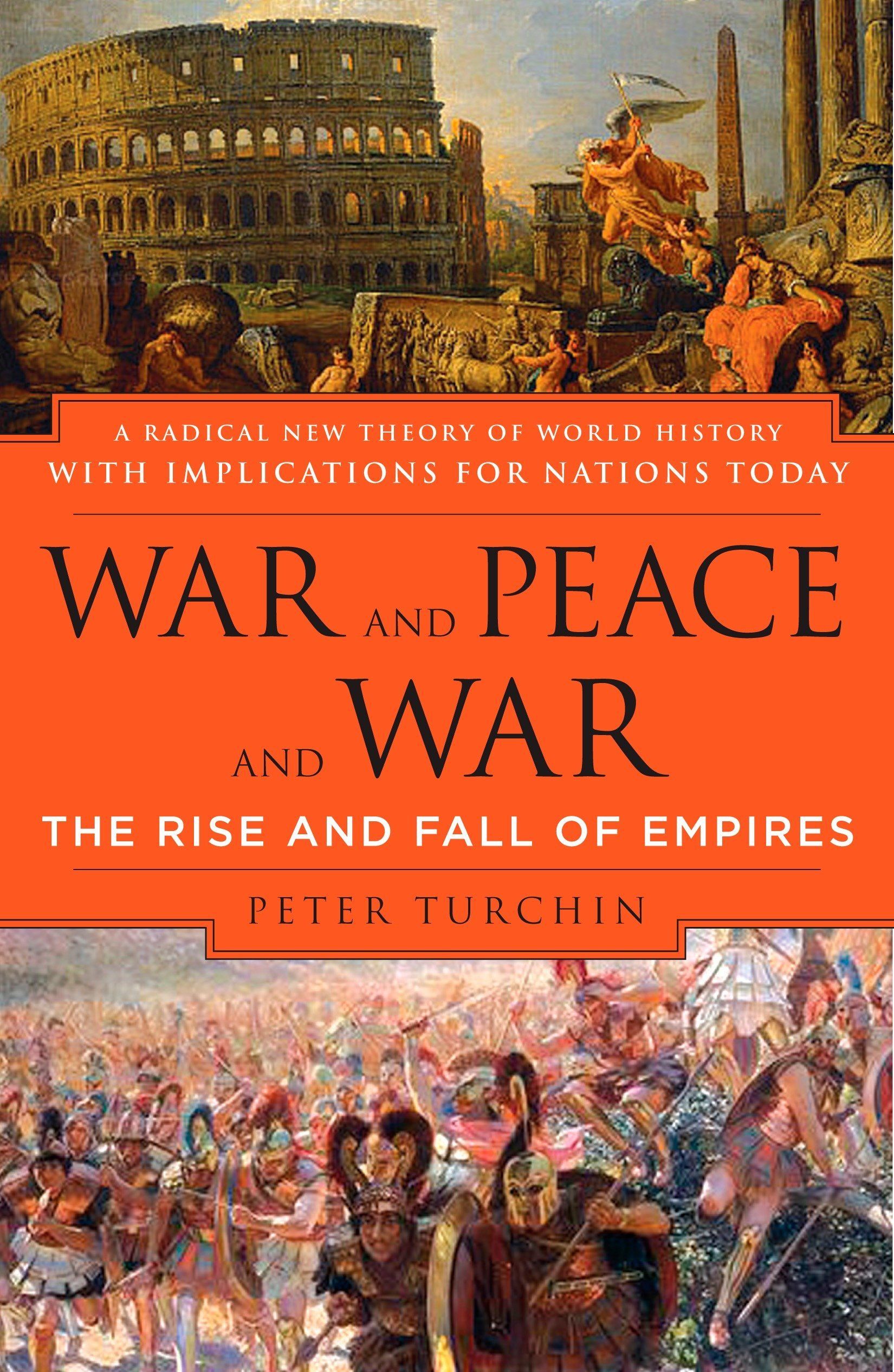
War and Peace and War
Empires rise and fall, populations and economies boom and bust, world religions spread or wither…
In War and Peace and War, Peter Turchin uses his expertise in evolutionary biology to offer a bold new theory about the course of world history. Turchin argues that the key to the formation of an empire is a society’s capacity for collective action. He demonstrates that high levels of cooperation are found where people have to band together to fight off…
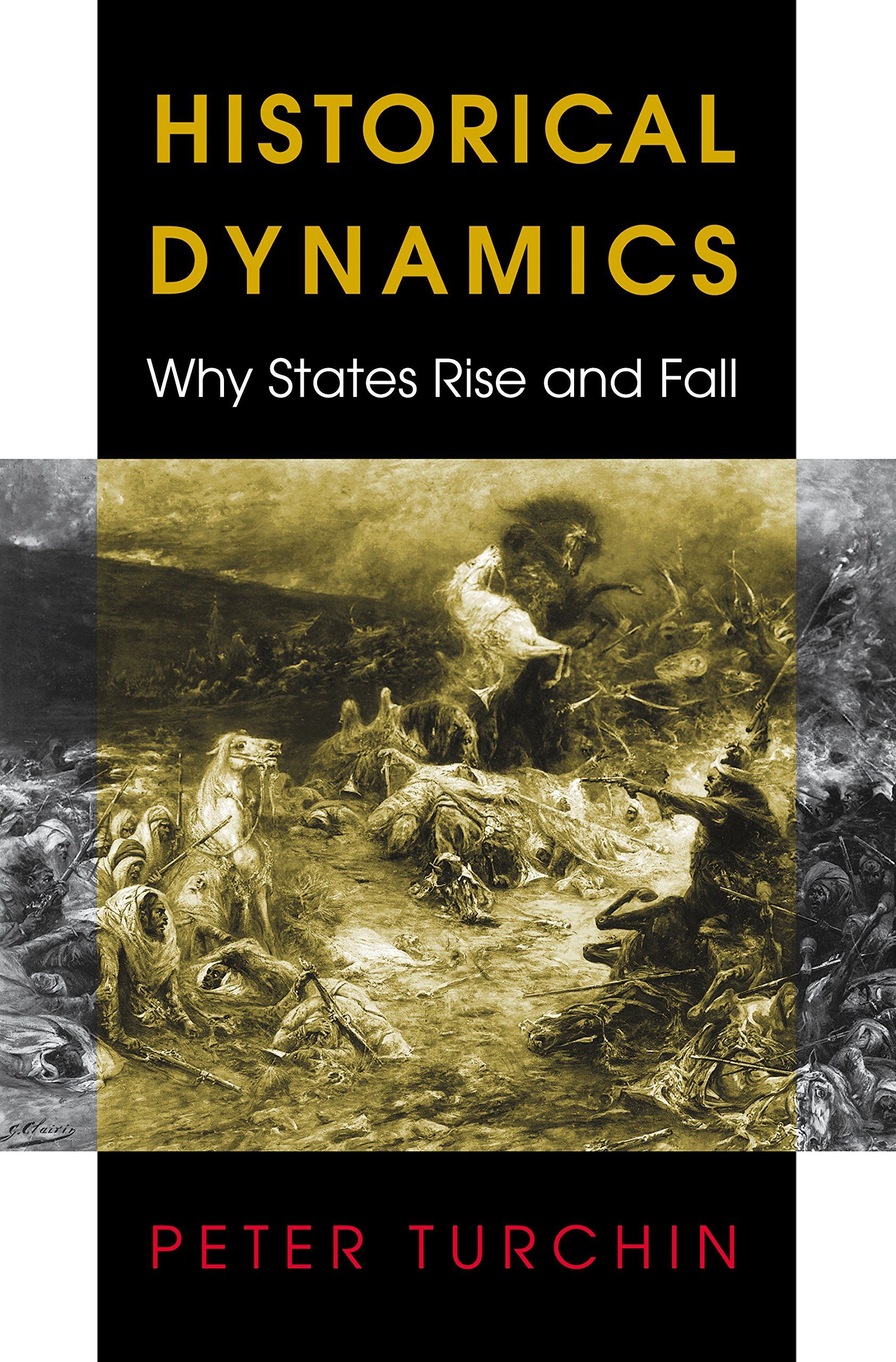
Historical Dynamics
A Synthetic Approach to Historical Expansions and Contractions through Mathematical Modeling and Empirical Analysis
Why States Rise and Fall Many historical processes are dynamic. Populations grow and decline. Empires expand and collapse. Religions spread and wither. Natural scientists have made great strides in understanding dynamical processes in the physical and biological worlds using a synthetic approach that combines mathematical modeling with statistical…
Figuring Out the Past: The 3,495 Vital Statistics that Explain World History
Discover the world records that define our history and jump headfirst into the past using scientific data that reveals accurate and insightful answers to life’s biggest questions.
What was history's biggest empire? Or the tallest building of the ancient world? What was the plumbing like in medieval Byzantium? The average wage in the Mughal Empire? Where did scientific writing first emerge? What was the bloodiest ever ritual human sacrifice? We are used to thinking about history in terms of stories. Yet we understand our own world…
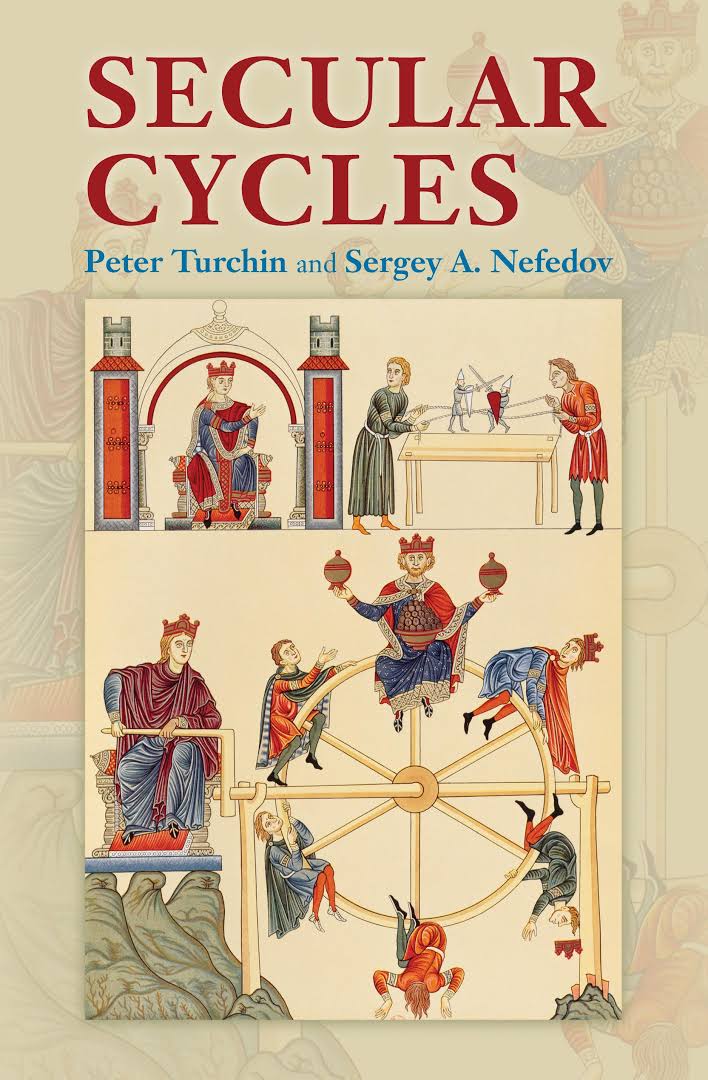
Secular Cycles
Unraveling the dynamics of History through Demographic, Economic, and Political Shifts in Agrarian Societies
Many historical processes exhibit recurrent patterns of change Century-long periods of population expansion come before long periods of stagnation and decline; the dynamics of prices mirror population oscillations; and states go through strong expansionist phases followed by periods of state failure, endemic sociopolitical instability, and territorial…
Why do we need models of historical dynamics
Many historical processes are dynamic (a dynamic process is one that changes with time). Populations increase and decline, economies expand and contract, while states grow and collapse. How can we study mechanisms that bring about temporal change and explain the observed trajectories? A very common approach, which has proved its worth in innumerable applications (particularly, but not exclusively, in the natural sciences), consists of taking a holistic phenomenon and mentally splitting it up into separate parts that are assumed to interact with each other. This is the dynamical systems approach, because the whole phenomenon is represented as a system consisting of several interacting elements (or subsystems). In the dynamical system's approach, we must describe mathematically how different subsystems interact with each other. This mathematical description is the model of the system, and we can use a variety of methods to study the dynamics predicted by the model, as well as attempt to test the model by comparing its predictions with the observed dynamics.
CRISES AVERTED. How A Few Past Societies Found Adaptive Reforms in the Face of Structural-Demographic Crises
Historians and social scientists have long been preoccupied with understanding and documenting periods of crisis. Such emphasis is only growing, and becoming more pressing, as the world continues to face a number of interrelated stressors in the form of irreversible climate change, major ecological shocks and disease outbreaks, eruptions of military violence, economic disruptions and deepening inequalities, political polarization and unrest, the rise of authoritarian and nationalist regimes. Crises in these domains are not new, but have been recurrent features of past societies. Although these periods have typically led to massive loss of life, the failure of critical institutions, and even complete societal collapse, there are instances in the historical record of societies managing to turn the tide of crisis even as violence and social turmoil grow. Here, we focus on four such cases of crises mitigated with structural reforms revealed from our previous historical analyses: early Republican Rome, mid-19th century England and Russia, USA during the the late 20th to early 21st centuries. Utilizing structural demographic theory as a lens to explore these cases, we seek to expose the pressures that built up leading to crisis and the early signs of violent confrontation revealed by these societies, as well as to examine the conditions and key decisions made in the midst of this unrest that allowed these societies to turn the tide and enact significant structural adaptations. Our findings have clear relevance to understanding and navigating similar crises in contemporary societies.