Publication
Lessons from Population Ecology for World-Systems Analyses of Long-Distance Synchrony
Authors
Thomas Hall, Peter Turchin
Abstract
In this chapter we have several objectives. First, we observe that processes within world-systems are often characterized by cycles or waves: chiefdoms cycle, empires rise and fall, and the modern state system undergoes a "power cycle" or "hegemonic sequence." Furthermore, all world-systems "pulsate," that is, expand rapidly, then more slowly, or even contract (Chase-Dunn & Hall 1997). Because spatial waves of expansion/contraction occur across all types of world-systems, such pulsations cannot be rooted in a specific mode of production or mode of accumulation. Rather, these cycles are themselves evidence that polities and world-systems are dynamical systems with various feedback loops. Second, we want to explore the issue of spatial influences and how they interact with various social factors in world-systemic processes, especially the synchronization of cycles across great distances. Third, we suggest some potential empirical tests of these models, and propose that, whether or not these models work, the exploration of them will deepen our understanding of social evolutionary processes. Fourth, we argue that this is not an exercise in reductionism, nor is it an attempt to remove actors from the system model. Rather, it helps clarify how structures change, how they constrain behaviors, and conversely, how behaviors can act on those evolutionary processes.
Journal
The World System and the Earth System
Cite This Publication
Thomas Hall, Peter Turchin. (2007). Lessons from Population Ecology for World-Systems Analyses of Long-Distance Synchrony. The World System and the Earth System.
Connections
Related work
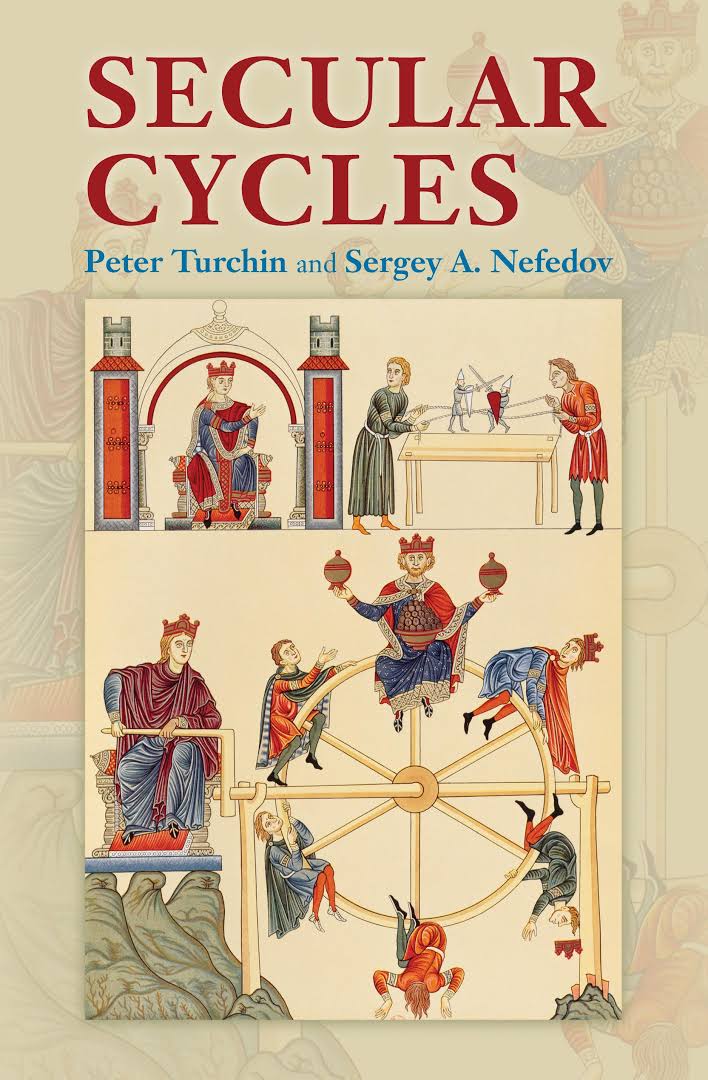
Secular Cycles
Unraveling the dynamics of History through Demographic, Economic, and Political Shifts in Agrarian Societies
Many historical processes exhibit recurrent patterns of change Century-long periods of population expansion come before long periods of stagnation and decline; the dynamics of prices mirror population oscillations; and states go through strong expansionist phases followed by periods of state failure, endemic sociopolitical instability, and territorial…
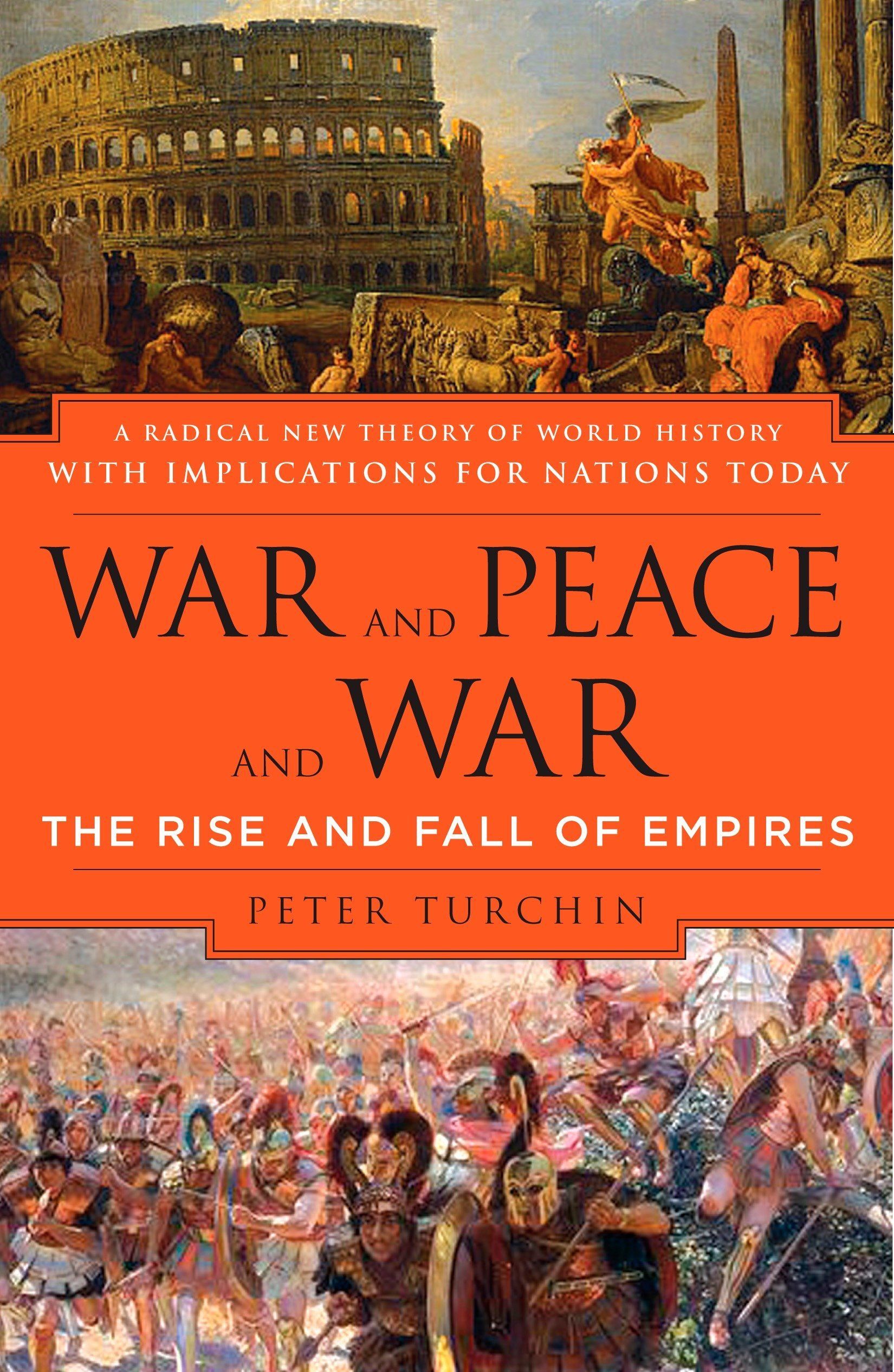
War and Peace and War
Empires rise and fall, populations and economies boom and bust, world religions spread or wither…
In War and Peace and War, Peter Turchin uses his expertise in evolutionary biology to offer a bold new theory about the course of world history. Turchin argues that the key to the formation of an empire is a society’s capacity for collective action. He demonstrates that high levels of cooperation are found where people have to band together to fight off…
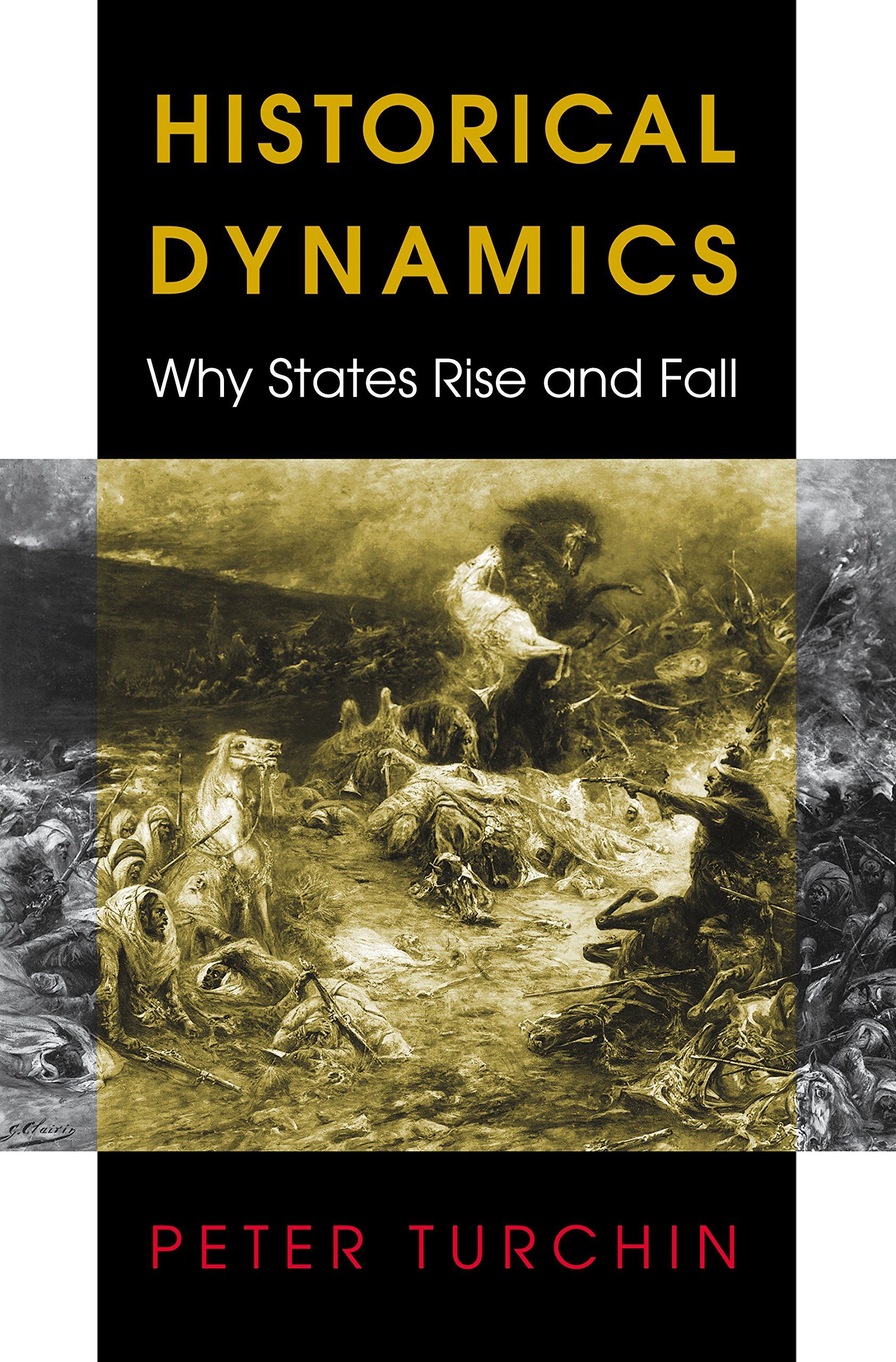
Historical Dynamics
A Synthetic Approach to Historical Expansions and Contractions through Mathematical Modeling and Empirical Analysis
Why States Rise and Fall Many historical processes are dynamic. Populations grow and decline. Empires expand and collapse. Religions spread and wither. Natural scientists have made great strides in understanding dynamical processes in the physical and biological worlds using a synthetic approach that combines mathematical modeling with statistical…
Structural-demographic analysis of the Qing Dynasty (1644–1912) collapse in China
This paper analyzes the collapse of the Qing dynasty (1644–1912) through the lens of the Structural Demographic Theory (SDT), a general framework for understanding the drivers of socio-political instability in state-level societies. Although a number of competing ideas for the collapse have been proposed, none provide a comprehensive explanation that incorporates the interaction of all the multiple drivers involved. We argue that the four-fold population explosion peaking in the 19th century, the growing competition for a stagnant number of elite positions, and increasing state fiscal stress combined to produce an increasingly disgruntled populace and elite, leading to significant internal rebellions. We find that while neither the ecological disasters nor the foreign incursions during the 19th century were sufficient on their own to bring down the Qing, when coupled with the rising internal socio-political stresses, they produced a rapid succession of triggering events that culminated in the Qing collapse.
Structural-Demographic Analysis of the Qing Dynasty (1644–1912) Collapse in China
This paper analyzes the collapse of the Qing dynasty (1644–1912) through the lens of the Structural Demographic Theory (SDT), a general framework for understanding the drivers of socio-political instability in state-level societies. Although a number of competing ideas for the collapse have been proposed, none provide a comprehensive explanation that incorporates the interaction of all the multiple drivers involved. We argue that the four-fold population explosion during the 19th century, the competition for a stagnant number of elite positions, and increasing state fiscal stress combined to produce an increasingly disgruntled populace and elite, leading to significant internal rebellions. We find that while neither the ecological disasters nor the foreign incursions witnessed during the 19th century were sufficient on their own to bring down the Qing, when coupled with the rising internal socio-political stresses, they produced a rapid succession of triggering events that culminated in the Qing collapse. Published In PLOS ONE
Religion and empire in the Axial Age
Book Symposium: Robert Bellah's Religion in Human Evolution .