Publication
Coin hoards speak of population declines in Ancient Rome
Authors
Peter Turchin, Walter Scheidel
Abstract
In times of violence, people tend to hide their valuables, which are later recovered unless the owners had been killed or driven away. Thus, the temporal distribution of unrecovered coin hoards is an excellent proxy for the intensity of internal warfare. We use this relationship to resolve a long-standing controversy in Roman history. Depending on who was counted in the early Imperial censuses (adult males or the entire citizenry including women and minors), the Roman citizen population of Italy either declined, or more than doubled, during the first century BCE. This period was characterized by a series of civil wars, and historical evidence indicates that high levels of sociopolitical instability are associated with demographic contractions. We fitted a simple model quantifying the effect of instability (proxied by hoard frequency) on population dynamics to the data before 100 BCE. The model predicts declining population after 100 BCE. This suggests that the vigorous growth scenario is highly implausible.
Journal
Proceedings of the National Academy of Sciences
Publication Details
Vol. 106 · No. 41 · pp. 17276-17279
Cite This Publication
Peter Turchin, Walter Scheidel. (2009). Coin hoards speak of population declines in Ancient Rome. Proceedings of the National Academy of Sciences, 106(41), 17276-17279. https://doi.org/10.1073/pnas.0904576106
Connections
Related work
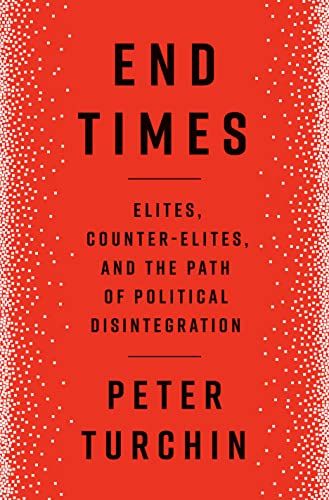
End Times
Elites, Counter-Elites, and the Path of Political Disintegration
From the pioneering co-founder of cliodynamics, the groundbreaking new interdisciplinary science of history, a big-picture explanation for America's civil strife and its possible endgames Peter Turchin, one of the most interesting social scientists of our age, has infused the study of history with approaches and insights from other fields for more than a…
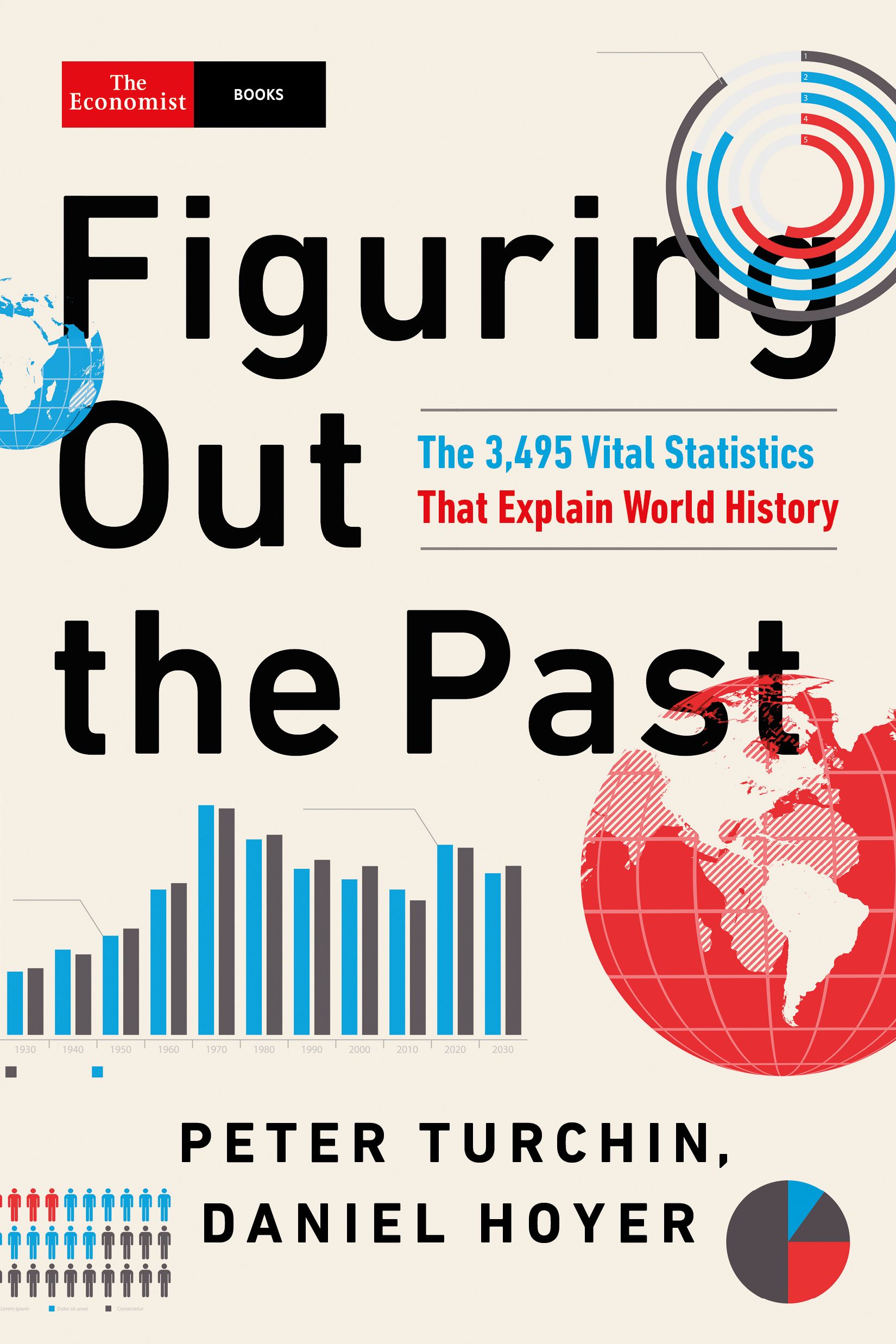
Figuring Out the Past: The 3,495 Vital Statistics that Explain World History
Discover the world records that define our history and jump headfirst into the past using scientific data that reveals accurate and insightful answers to life’s biggest questions.
What was history's biggest empire? Or the tallest building of the ancient world? What was the plumbing like in medieval Byzantium? The average wage in the Mughal Empire? Where did scientific writing first emerge? What was the bloodiest ever ritual human sacrifice? We are used to thinking about history in terms of stories. Yet we understand our own world…
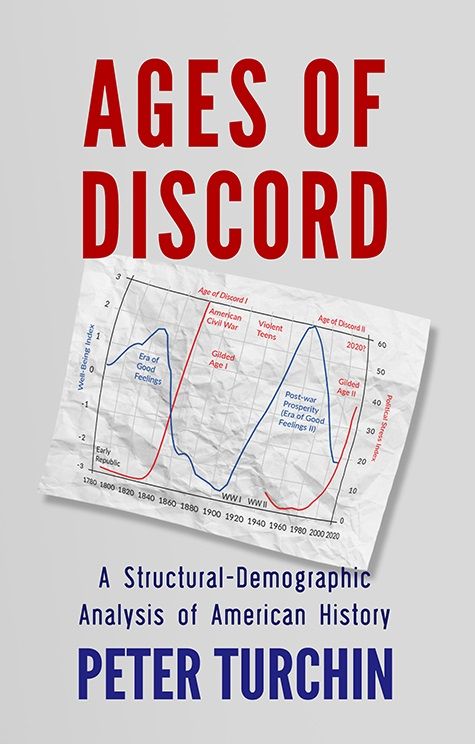
Ages of Discord
A Structural-Demographic Analysis of American History
The real wage of a US worker today is less than it was 40 years ago—but there are four times as many multimillionaires. As inequality grows, the politics become more poisonous. Every year, more and more Americans go on shooting sprees, killing strangers and passers-by—and now, increasingly, representatives of the state. Troubling trends of this kind are…
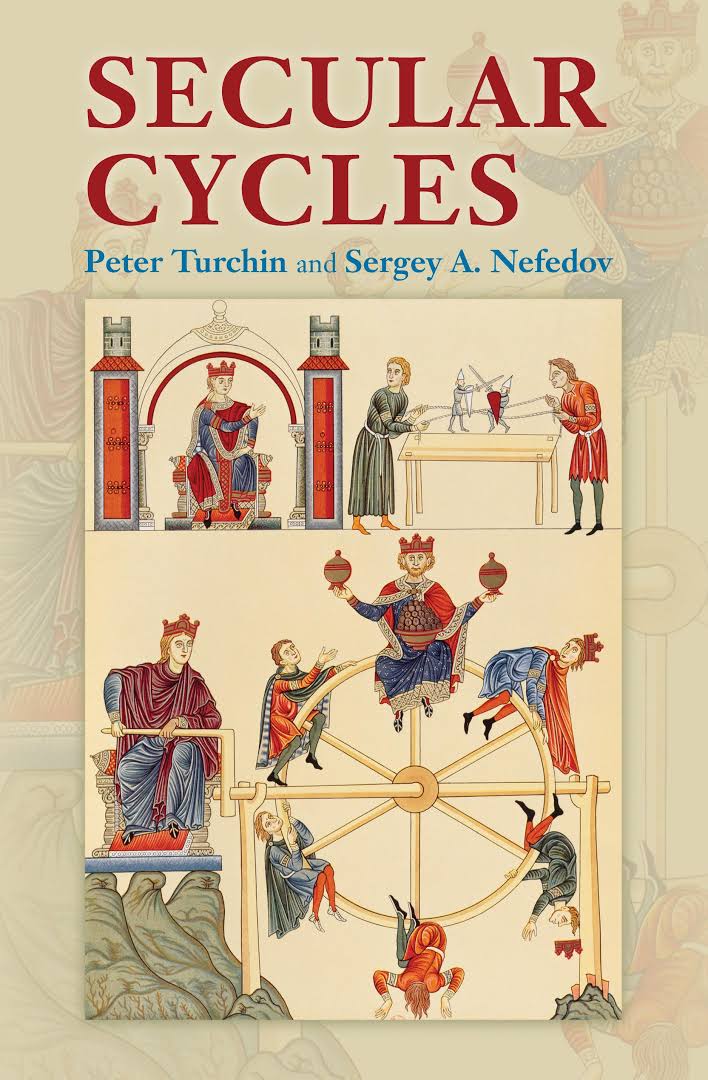
Secular Cycles
Unraveling the dynamics of History through Demographic, Economic, and Political Shifts in Agrarian Societies
Many historical processes exhibit recurrent patterns of change Century-long periods of population expansion come before long periods of stagnation and decline; the dynamics of prices mirror population oscillations; and states go through strong expansionist phases followed by periods of state failure, endemic sociopolitical instability, and territorial…
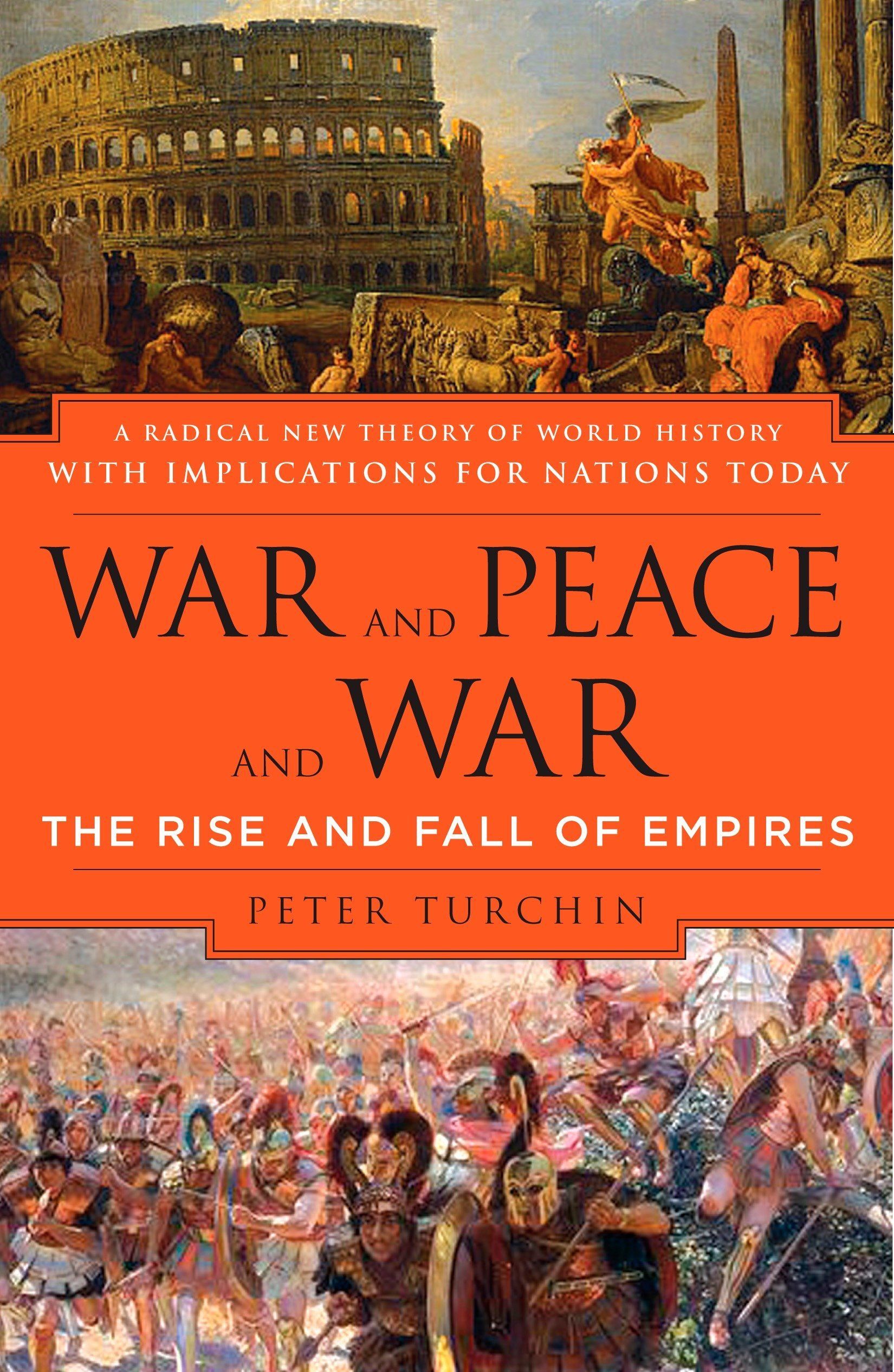
War and Peace and War
Empires rise and fall, populations and economies boom and bust, world religions spread or wither…
In War and Peace and War, Peter Turchin uses his expertise in evolutionary biology to offer a bold new theory about the course of world history. Turchin argues that the key to the formation of an empire is a society’s capacity for collective action. He demonstrates that high levels of cooperation are found where people have to band together to fight off…
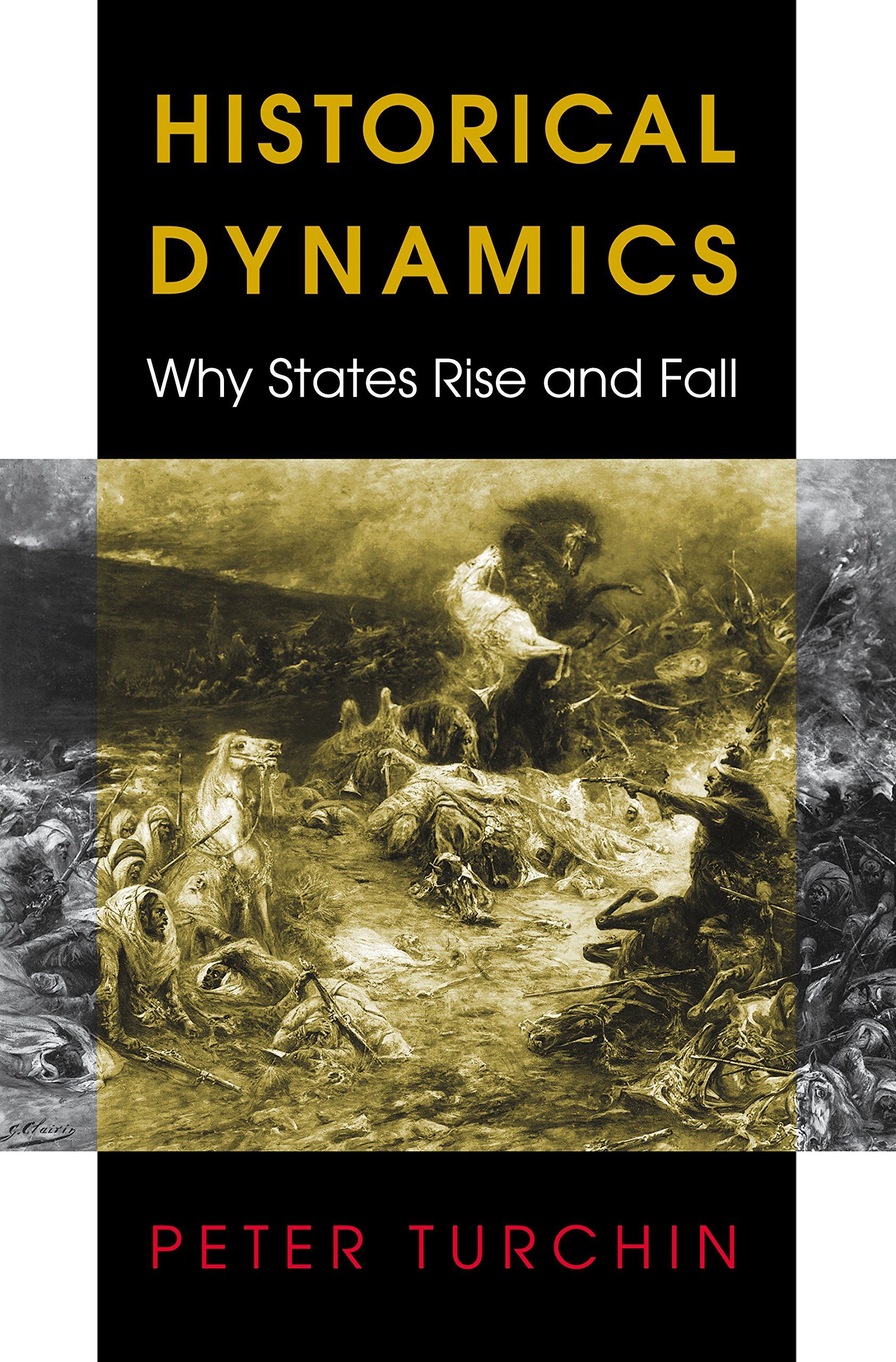
Historical Dynamics
A Synthetic Approach to Historical Expansions and Contractions through Mathematical Modeling and Empirical Analysis
Why States Rise and Fall Many historical processes are dynamic. Populations grow and decline. Empires expand and collapse. Religions spread and wither. Natural scientists have made great strides in understanding dynamical processes in the physical and biological worlds using a synthetic approach that combines mathematical modeling with statistical…