Diabetes expert warns paleo diet is dangerous and increases weight gain! proclaims the press release from University of Melbourne. It says:
A new study has revealed following a low-carbohydrate, high-fat diet for just eight weeks can lead to rapid weight gain and health complications.Hmm, I thought to myself as I was reading this. I have been on paleo diet for the last four years. Within the first six months I lost 20 pounds of fat. But perhaps I was simply a lucky individual. So I read on:The surprise finding, detailed in a paper in Nature journal Nutrition and Diabetes, has prompted University of Melbourne researchers to issue a warning about putting faith in so-called fad diets with little or no scientific evidence.
Lead author, Associate Prof Sof Andrikopoulos says this type of diet, exemplified in many forms of the popular Paleo diet, is not recommended - particularly for people who are already overweight and lead sedentary lifestyles.
Researchers at the University of Melbourne's originally sought to test whether high-fat and low-carbohydrate foods would benefit the health of people with pre-diabetes. They took two groups of overweight mice with pre-diabetes symptoms and put one group on the LCHF diet. The other group ate their normal diet. The mice were switched from a three per cent fat diet to a 60 per cent fat diet. Their carbs were reduced to only 20 per cent.I was laughing so hard, I almost fell off the chair. Now mouse is a decent model for human health if you want to study genetics and biochemistry that is generic to all mammals, and there is a lot of that. But this doesn't apply to our diets! Since the mouse and human lineages have separated, I don't know how many tens of million years ago, mice have been busy evolving adaptations to eat seeds. Yes, they can eat poisonous wheat and thrive on it!
Meanwhile, humans have been eating seeds for at most 10,000 years, and some populations (including ones from which I got my genes) much less than that. To make matters worse, two million years ago we sacrificed large guts together with their detoxification capacity for the sake of growing large brains. So most humans have very little ability to thrive on seeds.
This simple idea that different mammals evolved to thrive on very different diets is clearly beyond Assoc. Prof. Sof Andrikopoulos, President of the Australian Diabetes Society.
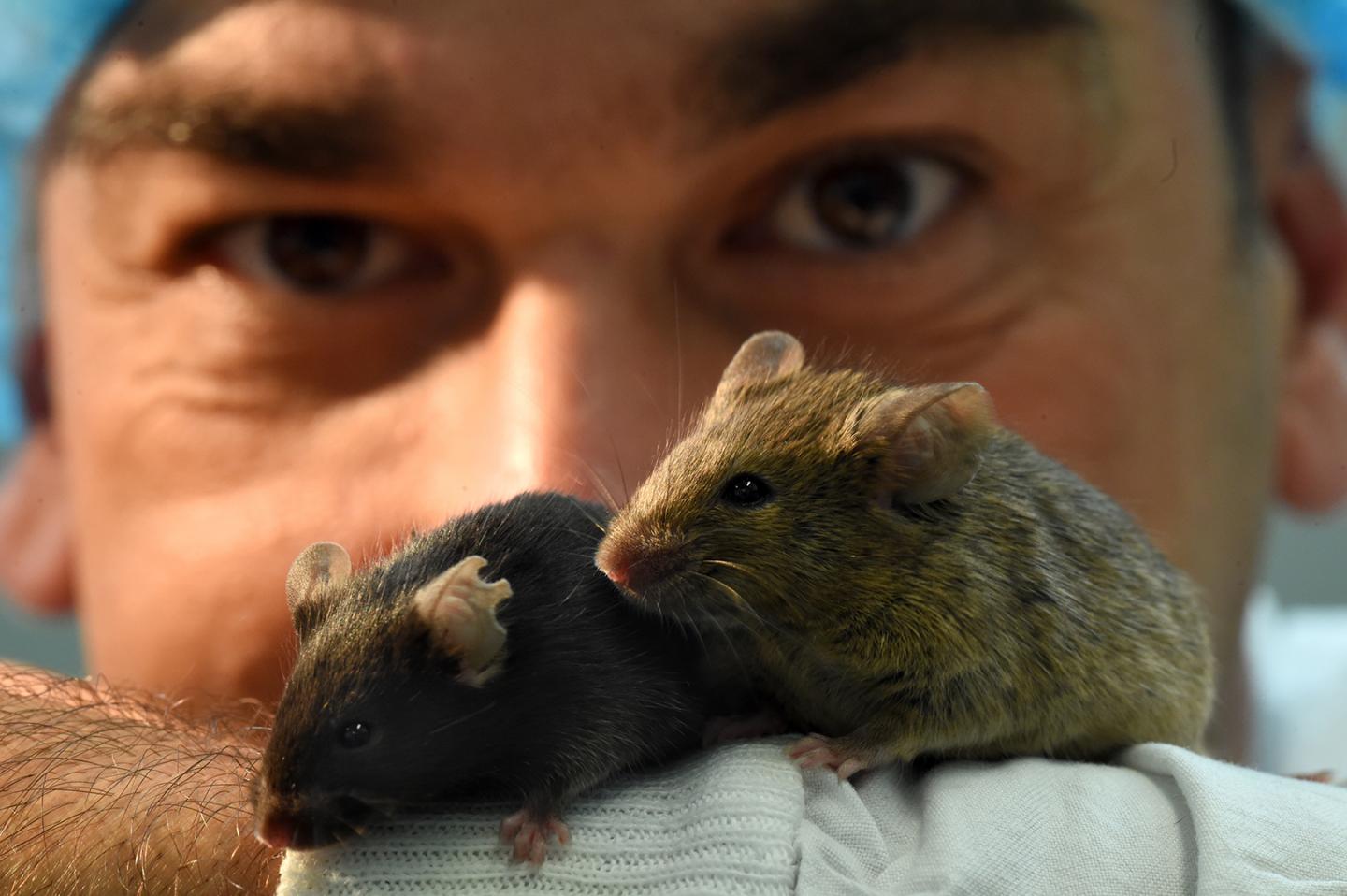
Credit: the University of Melbourne
I suppose you don't need to understand evolution if you want to be a medical researcher. Mr. Andrikopoulos concludes:"There is a very important public health message here. You need to be very careful with fad diets, always seek professional advice for weight management and always aim for diets backed by evidence."I don't think any comment is necessary.
Blog Archive Comments 15 comments Comments originally published with this post. This archive is read-only.
BOB
Human and mouse separated 90.9 millions of years ago http://www.timetree.org/search/pairwise/human/mouse
admin
Thanks -- that's about what I thought, but was too lazy to look it up.
al loomis
we ate seeds for much longer than 10,000 years. my chinese wives lived on sunflower seeds with pumpkin seeds as an occasional treat. any browsing animal would do the same. difficult to document african diets of 100,000 years ago, seed cases don't last.
admin
Hmm, I actually have a Ph.D. in Zoology, and I can tell you that browsers and granivores (seed predators) are completely separate ecological niches. And humans are not in either.
Mike Waller
There is a remark in a quite adult novel about Vampires that was very popular about 20 years, along the following lines: "I feel so sorry for our young students today, we having done all the good stuff decades ago". As I recall it, the imagined speaker was an academic, working in the Social Sciences,at a Mid-Western university. No doubt in some scientific disciplines this is wholly untrue, but is it fair to assume that in some subject areas, with the huge expansion of university education across the globe, it must now be very hard to find much that has not already been done to death; hence a little study like this in which even the fundamentals are wrong. On the subject of diet, I was going to comment on the seeming health and longevity implications of rice as opposed to wheat raised a week or so ago. The central point made in the piece was that the former seems to be much better for human health than the latter. Something that occurred to me is the possible relevance of the "starch to protein" shift has been widely noted in economies that get richer by way of industrialisation, with folking wanting a Western life-style along with Western technology. Would that have been factored in? Certainly there seems to be general acceptance that loading your gut with processed meat in particular is less then good idea from a health point of view and, on the face of things, wheatlands would be more readily transformed to stock-rearing than those areas under rice production.
Aaron Blaisdell
I wrote about this study on my blog as well: https://aaronblaisdellblogblog.wordpress.com/2016/02/19/diet-research-insantity/. I also posted the actual composition of the HF diet, which would not be paleo even for humans to consume! Take a look at how heavily refined and processed the diet is. Ciao, Aaron
admin
Thanks, Aaron. The case against this study gets more and more damning!
Peter Richerson
Hunter-gathers may well have eaten seeds before 10,000 years ago. At least Holocene hunter-gatherers mostly knew how to collect grass and weed seeds and parch them to make them edible. Think of parched seeds as low quality popcorn. There is a waterlogged archaeological site in Israel/Palestine, Ohalo II, with well preserved remains of harvested wild grass seeds dating back to 20 kya. It is a fair guess that at least Upper Paleolithic people harvested wild seeds when and where they were easy and abundant or as emergency foods. That said, parching is not a very effective way to get calories from grass and weed seeds, so parched seeds probably was seldom if ever a major source of calories. Dietary adaptation to heavy reliance on seed based diets probably only started in the latest Pleistocene (Natufian hunter-gatherers) and early Holocene (Incipient farmers and early farmers). We already know of some genetic and many cultural adaptations in response to plant-rich diets postdating agriculture. People may be fairly well adapted to to their customary diets.
admin
Sure humans must have eaten seeds episodically and as starvation foods before the Neolithic transition. And mice will eat opportunistically non-seed foods, like insect larvae, or cheese in a mousetrap. I am a big supporter of culture-driven gene-culture coevolution. And I don't deny that evolution has molded the ability of some humans to survive on seeds. But with two important caveats. First, many populations, including those from which I descend, have been exposed to grains for a much shorter time than the Natufians. Think Pacific Islanders, for chrissake. Second, over the last 4 years I've been trying to explain a fundamental insight due to Michael Rose that evolution works very slowly on traits expressed in older ages. So for people who are post-55, even if they come from Mediterranean populations, the Mediterranean diet may be unhealthy. The article which triggered my ridicule is entirely innocent of considering any of these subtleties.
Aaron Blaisdell
Rodents (mice and rats at least) have physiological adaptations that enable them to break down specific antinutrients that exist in grass seeds and legumes, such as phytic acid. Humans don't have these adaptations. It doesn't matter what the paleontological record says if the physiological adaptations to diets in extant species diverges so greatly. Plus, if an individual stops eating a specif food (grass seeds and legumes) and has significant improvements in health, then one can say that the individual probably would do well to remove them from his/her diet. This is Peter's and my case in regards to grains/legumes. This is the case for A LOT of folks who try a paleo diet, but not all individuals of course. I'll make my personal dietary recommendations based on my own empirical data over the anthropological record any day.
admin
Exactly, and I am not going to my old overweight and unhealthy myself on the strength of Mr. Andrikopoulos expert opinion.
Guillaume Belanger
It is indeed incredible how ignorant "experts" can be. It is also indeed very unfortunate that studies like this will surely convince many people that VLCHF can lead to weight gain when there is nothing that could be clearly than the fact that such a diet is the way everyone should be eating for optimal weight and health.
admin
Hear, hear!
Ross Hartshorn
If I may ask you all to indulge me in a bit of heresy, I'd like to throw out a question here. Since we know that difference ethnic groups have different tolerances for, say, milk or alcohol, I wonder if part of the problem in finding the right diet is that we're looking for one that applies to the entire species? In other words, granted that mice are not a good model, what if humans whose ancestors lived in a different culture (with different food-gathering customs) are not even a good model? Since we know that lactose tolerance evolved recently enough to be dependent on whether or not your ancestors raised cattle, why might it not be the same for grains, nightshades, and every other food that some people have trouble with and others don't? If so, it might be appropriate to make recommendations for a person's diet based on sequencing of your genome, finding which aboriginal group had the most similar DNA, and then trying to have a diet similar to the one customary in that group. I have basically no background or data to back this up, just throwing it out there as an idea to comment on.
Juan Alfonso
It is absurd. As with mainstream economics the problem here reside in the models used; A well-intentioned researcher tries to simplify his investigation by resorting to a very known and simple to handle animal subject: the mouse. But in doing that he loses in translation all the relevant things that this model should grasp; The paleodiet makes sense precisely because there has been a change in our diet during the last 10.000 years. Mice have not undergo such a change so, what makes this researcher think mice are a good animal model?... By the way, Peter, I wanted to ask you if besides weight loss you have experimented more benefits from the paleodiet. I am very fond of milk and bread so I would need a lot of benefits to quit them... I have also heard about a kind of paleo fitness or paleo cross training: it tries to mimic the kind of phisical activity our ancestors had,