link to the journal issue

Cliodynamics: The Journal of Quantitative History and Cultural Evolution

Volume 6, Issue 1, 2015

Articles

Modeling Strategic Decisions in the Formation of the Early Neo-Assyrian Empire
Baudains, Peter; Zamazalová, Silvie; Altaweel, Mark; Wilson, Alan

Agricultural productivity in past societies: Toward an empirically informed model for testing cultural evolutionary hypotheses
Currie, Thomas E; Bogaard, Amy; Cesaretti, Rudolf; Edwards, Neil; Francois, Pieter; Holden, Phillip et al.

Modeling the large-scale demographic changes of the Old World
Bennett, James

Databases

Seshat: The Global History Databank
Turchin, Peter; Brennan, Rob; Currie, Thomas; Feeney, Kevin; Francois, Pieter; Hoyer, Daniel et al.
Book Reviews

Are Cultural and Evolutionary Views of Human Warfare Converging? A Review of War, Peace and Human Nature: The Convergence of Evolutionary and Cultural Views, edited by Douglas P. Fry (Oxford University Press, 2015)
Mathew, Sarah

The Central Asian Role in the Making of Modern European Science: A Review of Warriors of the Cloisters: The Central Asian Origins of Science in the Medieval World, by Christopher Beckwith (Princeton University Press, 2012)
Saliba, George

Image source

Connections

Related work

Book

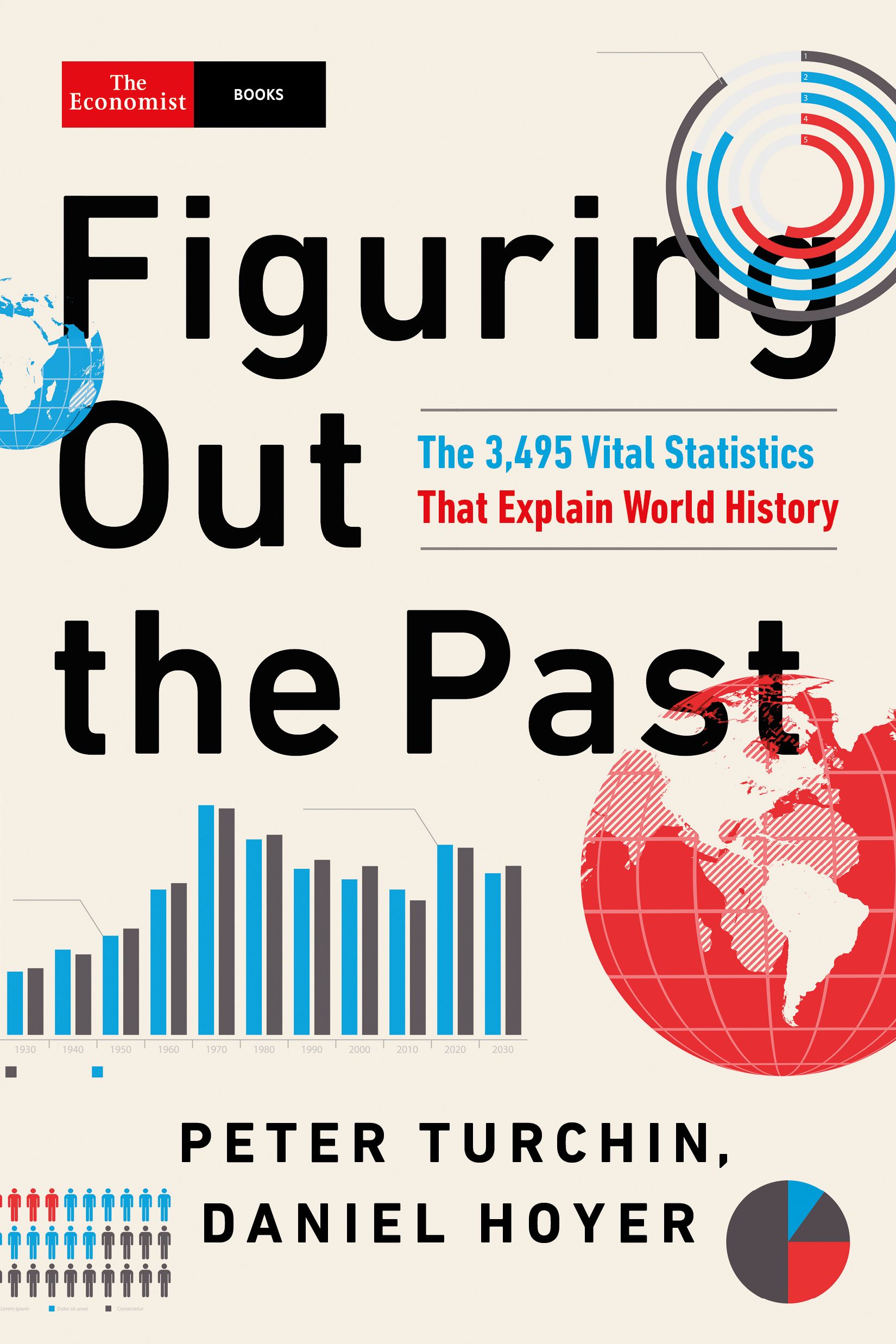
Figuring Out the Past: The 3,495 Vital Statistics that Explain World History

Nov 17, 2020Turchin, P., Hoyer, D.

Discover the world records that define our history and jump headfirst into the past using scientific data that reveals accurate and insightful answers to life’s biggest questions.

What was history's biggest empire? Or the tallest building of the ancient world? What was the plumbing like in medieval Byzantium? The average wage in the Mughal Empire? Where did scientific writing first emerge? What was the bloodiest ever ritual human sacrifice? We are used to thinking about history in terms of stories. Yet we understand our own world…

PublicAffairsHistorical DatabasesCliodynamics
Book

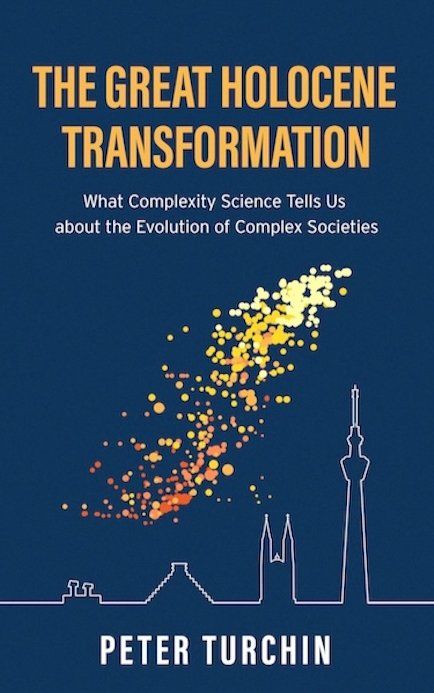
The Great Holocene Transformation

Sep 17, 2025Turchin, P.

What Complexity Science Tells Us about the Evolution of Complex Societies

Why do the 99.9% of humanity live in large-scale societies organized as states? During the Holocene (the last 10,000 years), human societies have been transformed utterly: from small groups of nomadic foragers to our current interconnected world of large-scale societies organized as states. Population numbers, agricultural productivity, technological…

Beresta BooksSocial ComplexityCooperation
Book

Ultrasociety

Nov 17, 2015Turchin, P.

Cooperation is powerful

We organize ourselves into communities of hundreds of millions of individuals, inhabit every continent, and send people into space. Human beings are nature’s greatest team players. And the truly astounding thing is, we only started our steep climb to the top of the rankings—overtaking wasps, bees, termites and ants—in the last 10,000 years. Genetic…

Beresta BooksCooperationCultural Evolution
Book

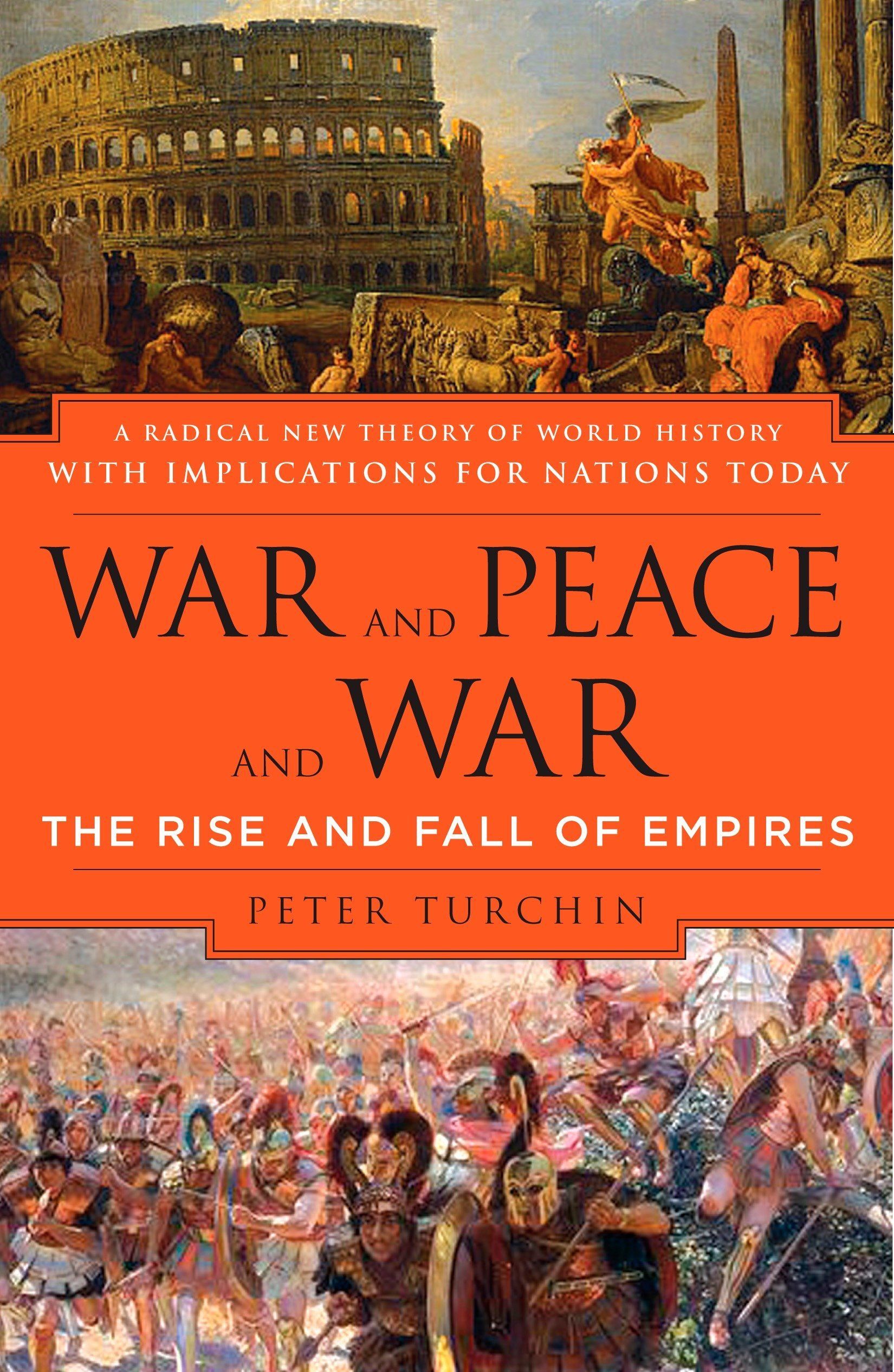
War and Peace and War

Feb 27, 2007Turchin, P.

Empires rise and fall, populations and economies boom and bust, world religions spread or wither…

In War and Peace and War, Peter Turchin uses his expertise in evolutionary biology to offer a bold new theory about the course of world history. Turchin argues that the key to the formation of an empire is a society’s capacity for collective action. He demonstrates that high levels of cooperation are found where people have to band together to fight off…

PlumeStates and EmpiresWar and Conflict
Book

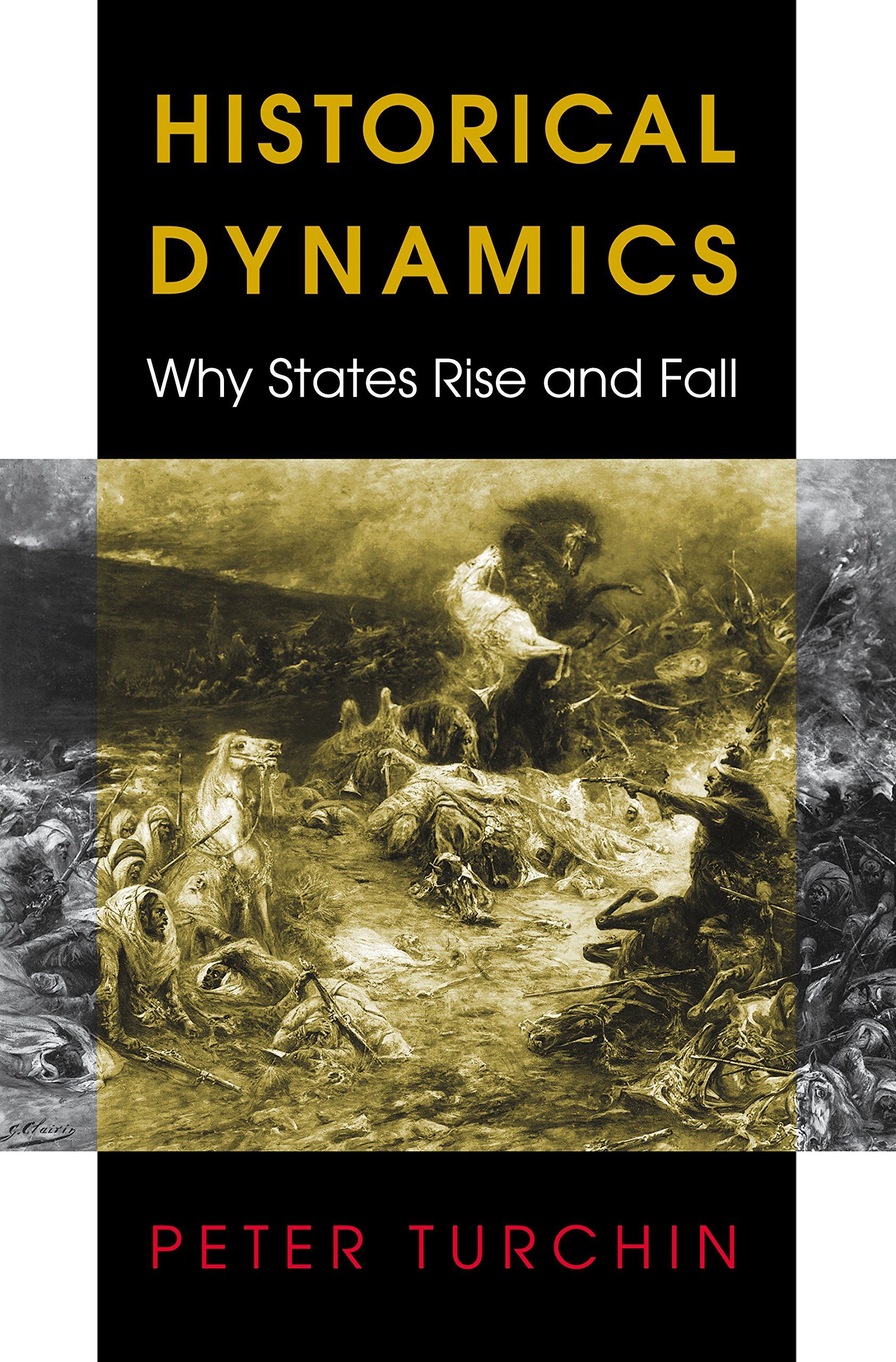
Historical Dynamics

Oct 19, 2003Turchin, P.

A Synthetic Approach to Historical Expansions and Contractions through Mathematical Modeling and Empirical Analysis

Why States Rise and Fall Many historical processes are dynamic. Populations grow and decline. Empires expand and collapse. Religions spread and wither. Natural scientists have made great strides in understanding dynamical processes in the physical and biological worlds using a synthetic approach that combines mathematical modeling with statistical…

Princeton University PressCliodynamicsStates and Empires
Publication

The Equinox2020 Seshat Data Release

Jun 7, 2020P., T., D., H., J., B., et al.

This report describes the current canonical time-series dataset named “Equinox2020,” a subset of Seshat: Global History Databank data for a well-curated list of polities and variables available on the Seshat Data Browser. The report provides an introduction to the methods and procedures of the Seshat project relating to the curation and release of the Equinox2020 dataset.

Cliodynamics: The Journal of Quantitative History and Cultural EvolutionHistorical DatabasesCultural Evolution