Dear friends, lovers of history, and those who care about the world we live in:

Please join me in supporting an international project that seeks to understand how human societies evolve. I am donating $10,000 from my book revenues this year to Seshat: Global History Databank, and I challenge you to also make a contribution! Give as much, or as little, as you can, but help us take Seshat forward.

Seshat: Global History Databank brings together the most current and comprehensive body of knowledge about human history in one place. Our goal is to systematically collect what is currently known about the social and political organization of human societies and how civilizations have evolved over time. You can learn more about this project on the Seshat webpage.

Why should you support Seshat? Those of us who live in wealthy and democratic countries tend to take the continuing functioning of our societies for granted. Yes, our wonderful complex societies have delivered unprecedented well-being to large numbers of their citizens (long and healthy lives, freedom from violence, and ability to pursue meaningful careers and fascinating hobbies). Yet they are much more fragile than is commonly realized. They are based on social cooperation, and cooperation can unravel rapidly, with catastrophic results for all. A central goal of the Seshat project is to test scientific theories about how human capacity to cooperate in huge societies evolved, and what explains why such cooperation periodically becomes unglued. Such an understanding will be sorely needed as we negotiate way forward. We should heed early warning signs (the Brexit, the immigration crisis in Europe, the poisonous presidential election in America). By supporting Seshat you will help to make positive futures more possible.

The roots of the Seshat project go back to 2010, and over the past years we’ve done an incredible amount of work to make this Databank reality. We have proven the Seshat concept: how to collect large amounts of high quality historical and archaeological data. The first articles based on these data will be submitted to the top scientific journals in the next few months.

In the process of building the Databank we trained a crew of highly intelligent, knowledgeable, and dedicated research assistants. They are the primary engine that drives data collection in Seshat. But if we can’t continue to support them, we lose them; we would allow all that concentrated talent and energy to dissipate. Your contribution (and mine) will help us continue employing these bright and hard-working women and men.

Thank you for joining me and contributing to a greater understanding of what makes human societies work!

DONATE HERE

The Evolution Institute, home of the Seshat Project, is a 501(c)(3) non-profit organization. Your donation is tax deductible.

Peter Turchin
Founding Editor and Overall Coordinator
Seshat: Global History Databank
Blog Archive Comments 7 comments Comments originally published with this post. This archive is read-only.
  1. Guillaume Belanger

    Now a monthly donor; shared on Facebook, Twitter, and LinkedIn. Hope others do the same.

    1. Peter Turchin

      Dear Guillaume, thank you very much for your support!

  2. Tim G

    Is it going to be Open Access? What are the copyright restrictions? I worry about supporting anything like this unless it has something like Creative Commons licensing.

    1. Peter Turchin

      Yes, all Seshat data will eventually be openly accessible under the CC-BY license. There will be a 18-month period before the data are released, so that contributors have a chance to analyze them first, but then it goes open access. We expect to release the first batch in March 2017.

  3. Tim G

    Ok, I've made a small donation, then. I'm a little skeptical about the need for an 18 month delay, but CC-BY is awesome, nonetheless ;)

    1. Peter Turchin

      Tim, really appreciate your support! My inclination is also to release data sooner, but on the other hand 18 months will not loom that much in the larger scheme of things (we've been at it for 6 years now).

  4. Mario Buildreps

    How do you verify the correctness of data in the databank? What interests me is how you transform a large amount of subjectiveness into what you believe is objectiveness?

Connections

Related work

Book

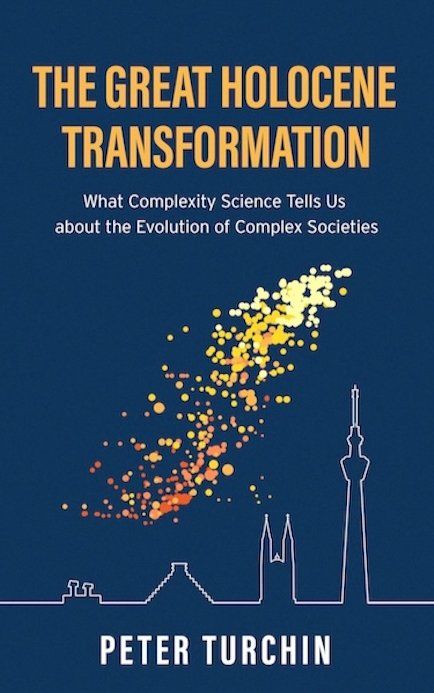
The Great Holocene Transformation

Sep 17, 2025Turchin, P.

What Complexity Science Tells Us about the Evolution of Complex Societies

Why do the 99.9% of humanity live in large-scale societies organized as states? During the Holocene (the last 10,000 years), human societies have been transformed utterly: from small groups of nomadic foragers to our current interconnected world of large-scale societies organized as states. Population numbers, agricultural productivity, technological…

Beresta BooksSocial ComplexityCooperation
Book

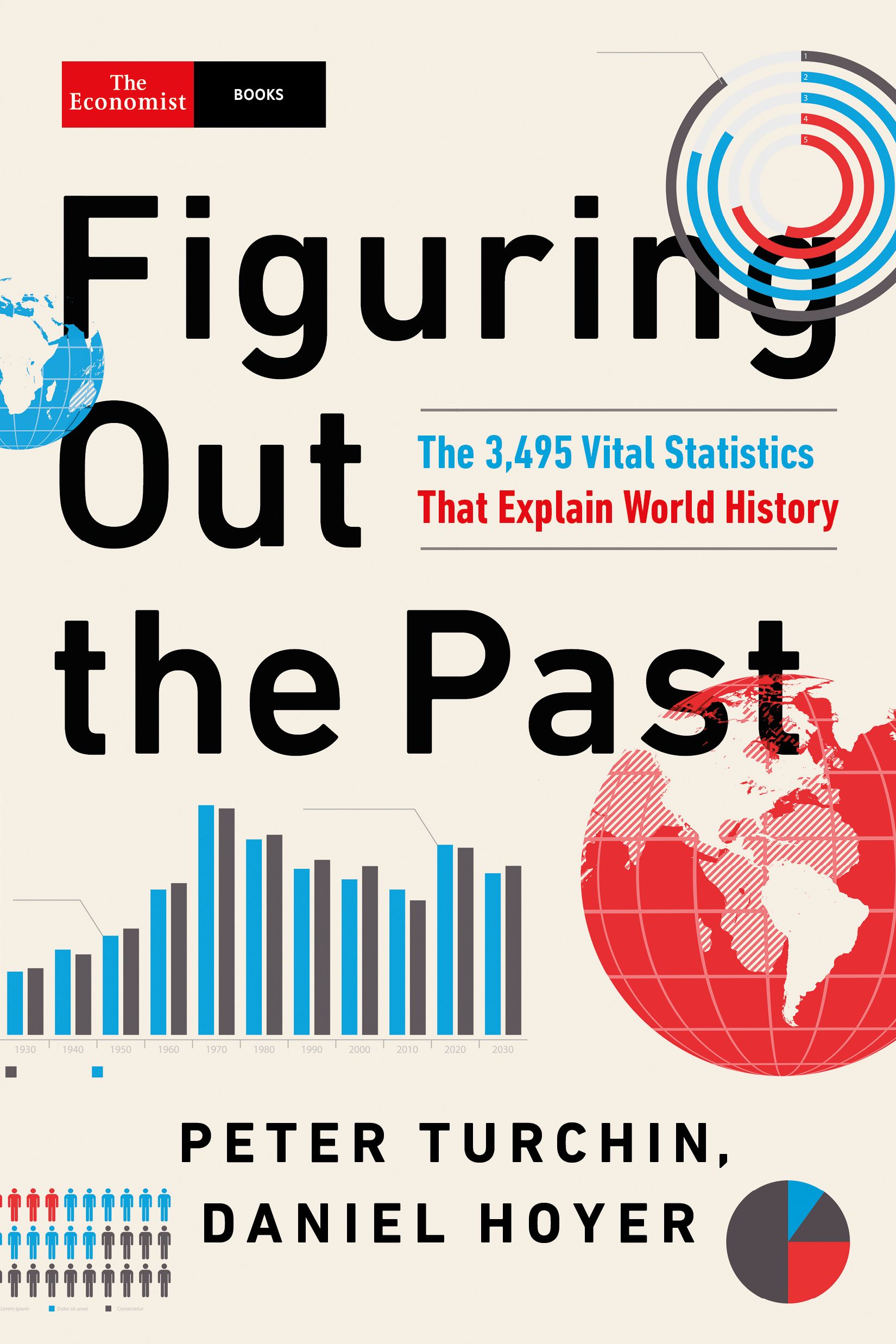
Figuring Out the Past: The 3,495 Vital Statistics that Explain World History

Nov 17, 2020Turchin, P., Hoyer, D.

Discover the world records that define our history and jump headfirst into the past using scientific data that reveals accurate and insightful answers to life’s biggest questions.

What was history's biggest empire? Or the tallest building of the ancient world? What was the plumbing like in medieval Byzantium? The average wage in the Mughal Empire? Where did scientific writing first emerge? What was the bloodiest ever ritual human sacrifice? We are used to thinking about history in terms of stories. Yet we understand our own world…

PublicAffairsHistorical DatabasesCliodynamics
Book

Ultrasociety

Nov 17, 2015Turchin, P.

Cooperation is powerful

We organize ourselves into communities of hundreds of millions of individuals, inhabit every continent, and send people into space. Human beings are nature’s greatest team players. And the truly astounding thing is, we only started our steep climb to the top of the rankings—overtaking wasps, bees, termites and ants—in the last 10,000 years. Genetic…

Beresta BooksCooperationCultural Evolution
Publication

What is society?

Jul 9, 2026Turchin, P.

This article engages with Mark Moffett’s proposed definition of society, which emphasizes shared group identification over social interaction, and argues for a different, problem-driven approach to definition in evolutionary social science. Rather than treating definitions as primary, I situate them within the broader research agenda aimed at explaining the Great Holocene Transformation—the dramatic expansion of human societies in scale and complexity over the past 10,000 years. My central analytical focus is on cooperation: the capacity of individuals to coordinate actions toward collective goals despite incentives to free-ride. Accordingly, society is defined here as a collective of individuals engaged in sustained cooperation, with interest group proposed as a more flexible and analytically useful term. Within this framework, polities represent a key subtype of interest groups, characterized by their role as independent political units whose persistence depends on maintaining cooperative cohesion, particularly among elites. Other commonly cited features of societies—such as group identification, territoriality, and intergenerational continuity—are treated as secondary mechanisms that support cooperation rather than defining properties. Ultimately, I argue that flexible, operational definitions are most valuable at intermediate stages of scientific inquiry, where they facilitate the construction and empirical testing of theoretical models.

Theory and SocietyCooperationSocial Complexity
Publication

Social complexity promotes cooperation and functional integration in large-scale societies

May 29, 2026Sandeford, D. S., Turchin, P., Hamilton, M. J., et al.

How do large-scale human societies maintain functional integration? Over the last 12,000 years, polities grew over six orders of magnitude in population, far exceeding the scale at which the interpersonal mechanisms that promote cooperation in small-scale societies can operate. Here we test the hypothesis that cooperation and functional integration in large-scale societies is promoted by social (and, specifically, institutional) complexity. We model large-scale societies as territorial social networks subject to energetic, cognitive, and competitive constraints. We demonstrate that agricultural intensification generates increasing population density, raising the per capita rate of social interaction beyond what small-scale mechanisms can sustain and requiring institutional rules to substitute for interpersonal knowledge. The model predicts that territory and social complexity scale with polity population with exponents of 5/6 and 1/6. Tests against data describing hundreds of polities spanning the Holocene support these predictions, providing quantitative evidence that social complexity is a central integrative mechanism enabling large-scale human cooperation.

SocArXivSocial ComplexityCooperation
Publication

Soil Fertility Depletion is not a Credible Mechanism for Population Boom/Bust Cycles in Early Agricultural Societies

Oct 9, 2024Daniel Kondor, Peter Turchin

Soil fertility depletion presents a negative feedback mechanism that could have impacted early adopters of agriculture. We consider whether such feedback can lead to population cycles among early agriculturalists, such as the boom-and-bust patterns suggested by an increasing amount of evidence for Neolithic Europe. Using general mathematical arguments, we show that this is unlikely, due to the interplay of two factors. First, there is an important mathematical difference between biotic (i.e., logistic) and abiotic resource replenishment; soil nutrients are better modeled by the abiotic case, which leads to more stable dynamics. Second, under realistic conditions, the resource replenishment process operates on fast time scales compared to attainable population growth rates, reinforcing the tendency towards stable dynamics. Both these factors are relevant for early agricultural societies and imply that nutrient depletion is likely not the main contributing factor to boom-and-bust cycles observed in the archaeological record.

Human EcologyCultural EvolutionHistorical Databases